Historical Visit to the Multatuli Museum
Hi everyone! Today I want to share my experience visiting the Multatuli Museum in Serang. This was my second visit, after the first time failed due to the museum being closed. Finally, the opportunity came again, and I didn’t miss it.
How to Get to the Multatuli Museum?
To get to the Multatuli Museum in Rangkasbitung by commuter train (KRL), the first step is to go to the nearest KRL station to your location, then head to Tanah Abang Station.
Next, wait for the KRL bound for Rangkasbitung at platform 5 or 6. Be sure to check the departure schedule displayed on the information screen or ask the station staff to confirm the KRL’s departure time. Once the KRL arrives, board and enjoy the journey to Rangkasbitung. This journey usually takes about 2 hours, depending on traffic congestion and travel conditions.
Once you arrive at Rangkasbitung Station, you can continue your journey to the Multatuli Museum by using local public transportation such as public transportation (angkot), motorcycle taxis (ojek), or on foot. FYI, it’s about a 15-20 minute walk from Rangkasbitung Station. The route to the location is also quite easy, with Google Maps guidance.
A Small Yet Impressive Museum
The first time I visited this museum, I was a little disappointed because it was closed. However, this time I was fortunate enough to be able to enter for a very affordable entrance fee of only 2,000 rupiah.
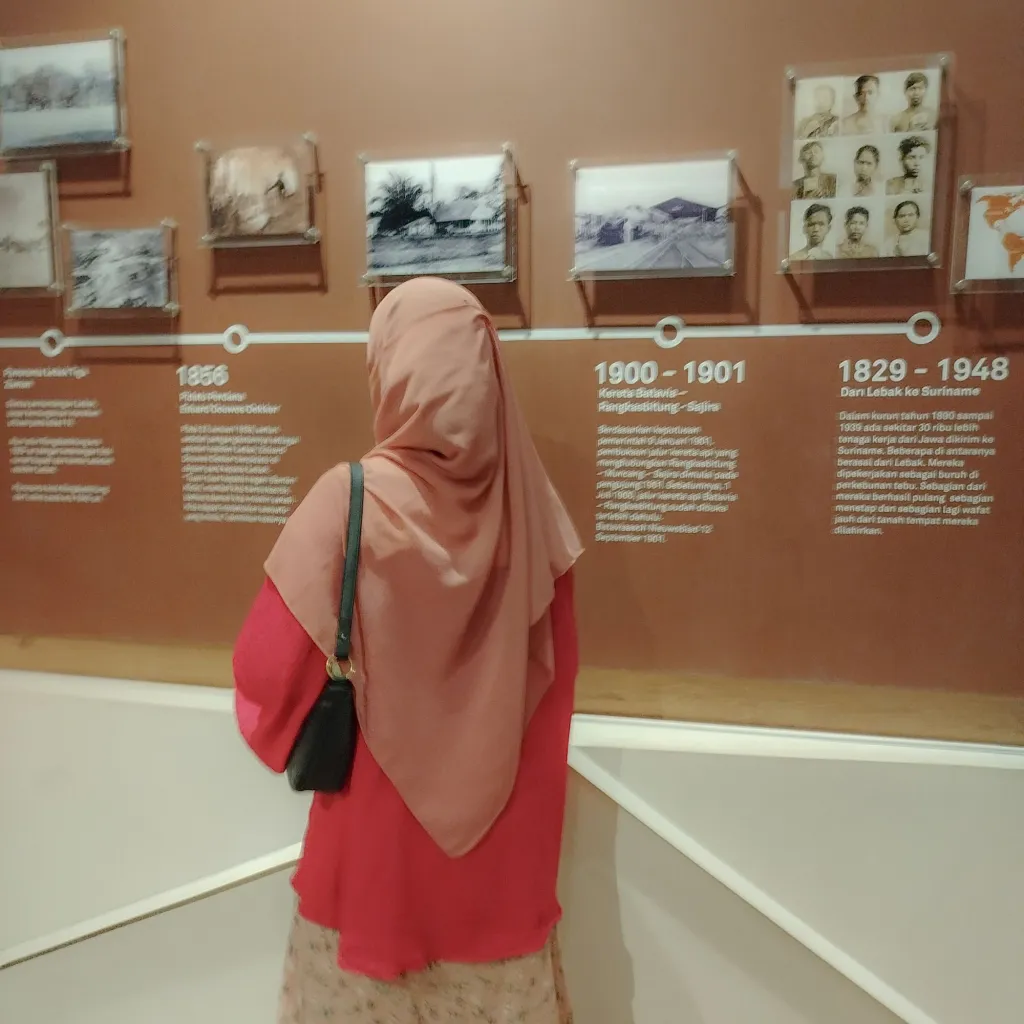
Upon entering the museum, my first impression was a calm and serene atmosphere. The museum may not be large, but the collections and information presented are quite interesting, especially for history and literature lovers.
Delving into the Life of Multatuli
Multatuli, whose real name was Douwes Dekker, is a figure known for his controversial and influential works, such as “Max Havelaar.” In this museum, I can see various artifacts related to Multatuli’s life and works, from photographs and paintings to his original writings.
Lack of Information Presented
While I enjoyed browsing the museum’s collections, I felt there were gaps in the information provided. The explanations were rather brief and lacked depth. I had hoped for more information about Multatuli’s historical background, the colonial context of his time, and the impact of his work on the Dutch East Indies.
Potential for Improvement at the Multatuli Museum
To enhance the visitor experience, the museum could consider adding more historical information. For example, it could explain the political and social conditions in the Dutch East Indies at the time, how Multatuli’s works influenced social change, and so on.
Furthermore, I also hope to see more context about local culture in Banten and how it interacted with the Dutch colonial era. This would provide a broader understanding of the historical background in which Multatuli lived and worked.
Despite some shortcomings in the presentation of information, my visit to the Multatuli Museum was still a valuable experience. For fans of literature and history, this museum is well worth a visit. With a very affordable entrance fee, we can learn more about Multatuli’s life and legacy.
Hopefully, going forward, this museum can continue to improve its presentation of information to make the visitor experience even more satisfying.